 Skip to content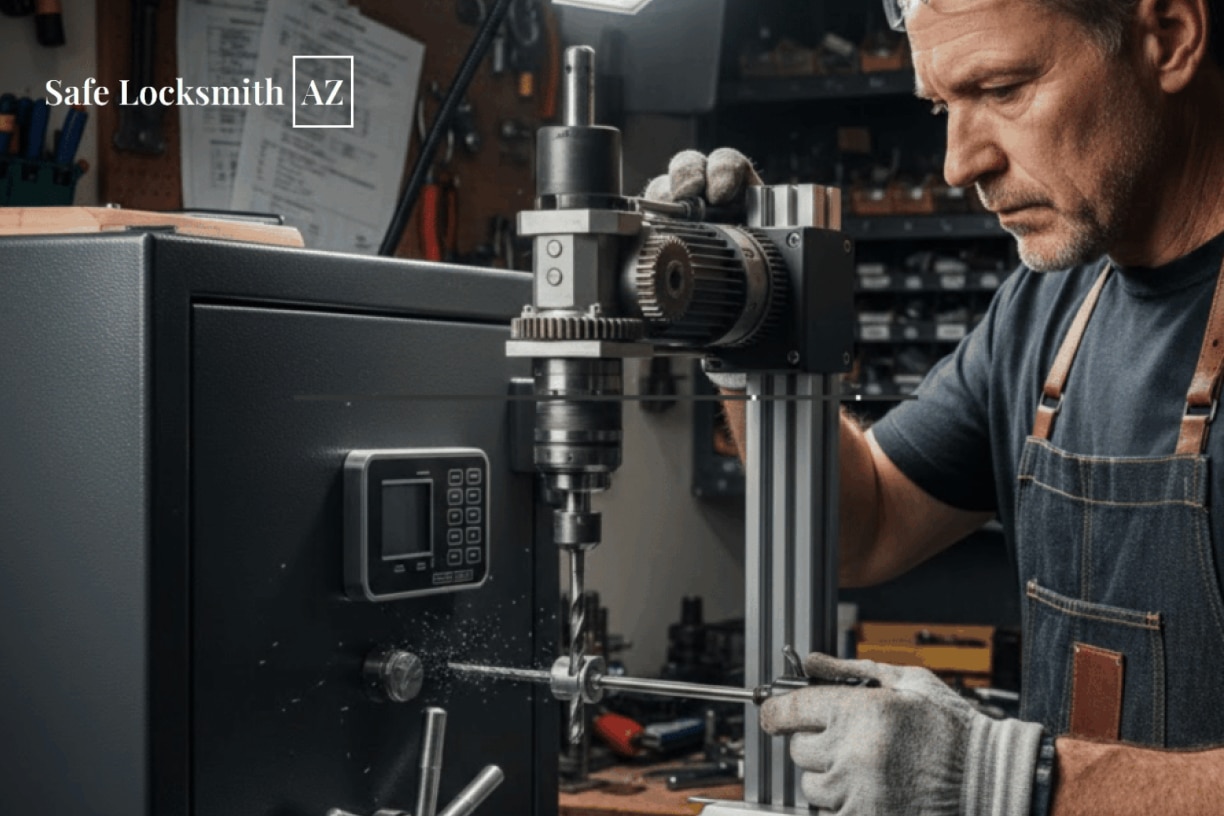
Can a Locksmith Open a Gun Safe?
A specialized locksmith can open a gun safe when the owner loses the combination, the electronic keypad fails, or the mechanical components jam. Professional safe technicians use several methods to regain access, ranging from non-destructive manipulation to precision drilling. The specific approach depends on the safe’s security rating, the type of lock installed, and the reason for the lockout.
This guide provides a detailed look at how professionals handle safe entries and what owners should expect during the process. Safe Locksmith AZ offers these details to help owners understand the technical labor involved in preserving both the security and the contents of a high-quality firearm container.
How Professionals Approach Gun Safe Entry
Opening a gun safe is a technical task that differs significantly from unlocking a car or a house door. Gun safes often feature hard plate steel, relockers, and glass triggers designed to permanently lock the bolt work if someone attempts a forced entry. A qualified locksmith analyzes the safe’s construction before choosing the appropriate tools.
Dial Manipulation
For mechanical combination locks, the preferred method is manipulation. This technique involves “feeling” the wheels inside the lock as they rotate. By identifying the slight vibrations and sounds produced by the lock’s internal fence and drive cam, a technician can deduce the combination. This method leaves the safe completely functional and undamaged; however, it requires significant patience and a deep understanding of mechanical tolerances.
Electronic Bypass and Reset
Many modern gun safes use digital keypads. When these fail, the culprit is often a dead battery, a frayed wire, or a failed solenoid. According to a technical guide from Liberty Safe, electronic locks sometimes include a management reset code or a physical override key. If those options are unavailable, a locksmith might use a specialized electronic diagnostic tool to communicate with the lock’s internal computer to trigger the opening mechanism.
Scoping the Lock
If manipulation is not possible, a locksmith might use a scope. This involves drilling a very small hole, often less than a quarter-inch in diameter, and inserting a fiber-optic camera. The technician uses the camera to look inside the lock casing and observe the alignment of the wheels or the position of the solenoid. This allows for a precise opening with minimal cosmetic damage. The small hole is easily repaired with a steel pin and weld, maintaining the safe’s fire and security ratings.
Understanding Safe Security Ratings and Mechanisms
The difficulty of opening a gun safe often correlates with its Underwriters Laboratories (UL) rating. These ratings inform a locksmith about the specific defenses they will encounter inside the door. A report from UL Solutions explains that ratings like RSC (Residential Security Container) or TL-15 indicate how long a safe can withstand an attack with specific tools.
Common Lock Categories
- Group 2 Mechanical Locks: These are standard on many mid-range gun safes. They are reliable but can be susceptible to manipulation by an expert.
- Type 1 Electronic Locks: These offer fast access but rely on battery power and circuit boards.
- High-Security Mechanical: These locks include extra features to prevent manipulation and are often found on commercial-grade safes.
Market Trends in Safe Ownership
The demand for professional safe services has increased alongside rising firearm sales. Research published by Fortune Business Insights notes that the global safe and vault market is growing as more homeowners invest in high-security storage. This industry growth means locksmiths must constantly update their skills to handle new biometric and hybrid locking systems effectively.
Comparison of Professional Opening Methods
The table below outlines the common techniques used by locksmiths and how they affect the safe.
| Method | Estimated Time | Damage Level | Cost Range | Best For |
|---|---|---|---|---|
| Manipulation | 1 to 5 Hours | None | Moderate to High | Mechanical Dial Locks |
| Electronic Bypass | 30 to 60 Mins | None | Low to Moderate | Failed Keypads |
| Scoping | 1 to 2 Hours | Minimal (Repairable) | Moderate | Unknown Combinations |
| Precision Drilling | 1 to 3 Hours | Moderate (Repairable) | High | Mechanical Failures |
Things to Consider Before Calling a Locksmith
Before requesting service, owners should gather specific information to ensure the technician arrives with the correct tools. Providing accurate details saves time and reduces the risk of unnecessary drilling.
Identify the Brand and Model
Safe construction varies significantly between manufacturers. A locksmith needs to know if the safe is a light-gauge steel cabinet or a heavy-duty vault. This information helps them determine if the unit contains glass relockers, which shatter and lock the bolts if they detect heat or drill pressure.
Check the Warranty
Some safe manufacturers provide lifetime warranties that cover locksmith services if the lock fails due to a defect. According to recommendations from the Bureau of Alcohol, Tobacco, Firearms and Explosives (ATF), maintaining secure storage is a priority for safety, and many manufacturers support this by offering repair programs. Attempting to open the safe yourself usually voids these warranties.
Confirm Ownership
A professional locksmith will require proof of ownership and identification before starting any work. This is a standard security practice to prevent unauthorized access to firearms.
Bonus Tip: Before calling for professional help, always try a fresh, name-brand 9-volt battery in digital locks. Many “lockouts” occur because a battery has enough power to beep, but lacks the amperage required to pull the solenoid.
Common Reasons for Gun Safe Lockouts
Mechanical parts eventually wear out, and electronic components can fail without warning. Safe Locksmith AZ frequently encounters these specific issues during service calls.
Bolt Pressure
If the safe is overstuffed, the contents can push against the internal bolts. This creates friction that prevents the lock from turning or the solenoid from clicking. Pushing firmly on the door while entering the code or turning the dial can often relieve this physical pressure.
Mechanical Drift
Over decades, the wheels inside a mechanical lock can shift slightly. A combination that worked for twenty years might suddenly be off by a half-number. A locksmith can often find the “new” combination by testing the tolerances around the original numbers.
Wiring Failures
In digital safes, the wire connecting the keypad to the internal lock body can become pinched or brittle. This is a common point of failure in safes where the keypad is frequently removed to change batteries, leading to a loss of communication with the locking mechanism.
Common Questions About Locksmiths and Gun Safes
Can a locksmith change my combination after opening the safe?
Yes. Once the safe is open, a locksmith can reset the mechanical wheels or reprogram the digital lock to a new code of your choice. It is standard practice to change the combination if it was previously lost or shared with unauthorized individuals.
Will drilling the safe make it useless?
No. When performed by a professional, drilling is a surgical process. Technicians target a specific point to trigger the release. Afterward, the hole is filled with a specialized steel plug or welded shut, which often makes that specific spot even harder to drill in the future.
Can any locksmith open a gun safe?
Not necessarily. Most locksmiths focus on automotive or residential locks. Safe work requires specialized training and expensive equipment like magnetic drill rigs and borescopes. It is important to ask if the technician is a “Certified Safe Tech.”
Bonus Tip: Lubricate your safe’s active bolts once a year with a small amount of high-quality grease. Avoid spraying oils like WD-40 into the lock mechanism itself, as this can gum up the moving parts over time.
Frequently Asked Questions
Can a locksmith open a biometric gun safe?
Yes. Biometric safes usually feature a physical override key or an emergency power port. If those fail, a locksmith can use scoping or drilling techniques similar to those used on standard electronic safes.
How much does it cost to have a gun safe opened?
Costs vary based on the safe’s security level and the required opening method. A simple electronic bypass might cost between $150 and $250, while a high-security drill-out and repair can exceed $500.
How long does it take to open a gun safe?
A standard lockout usually takes between one and three hours. High-security safes with heavy hard plates or multiple relockers may take longer if the locksmith must navigate complex internal defenses.
Can a locksmith make a new key for my gun safe?
If the safe uses a physical key for entry or override, a locksmith can often cut a new key by using the lock code or by picking the lock and creating a key from the internal wafers.
Final Steps for Gun Safe Owners
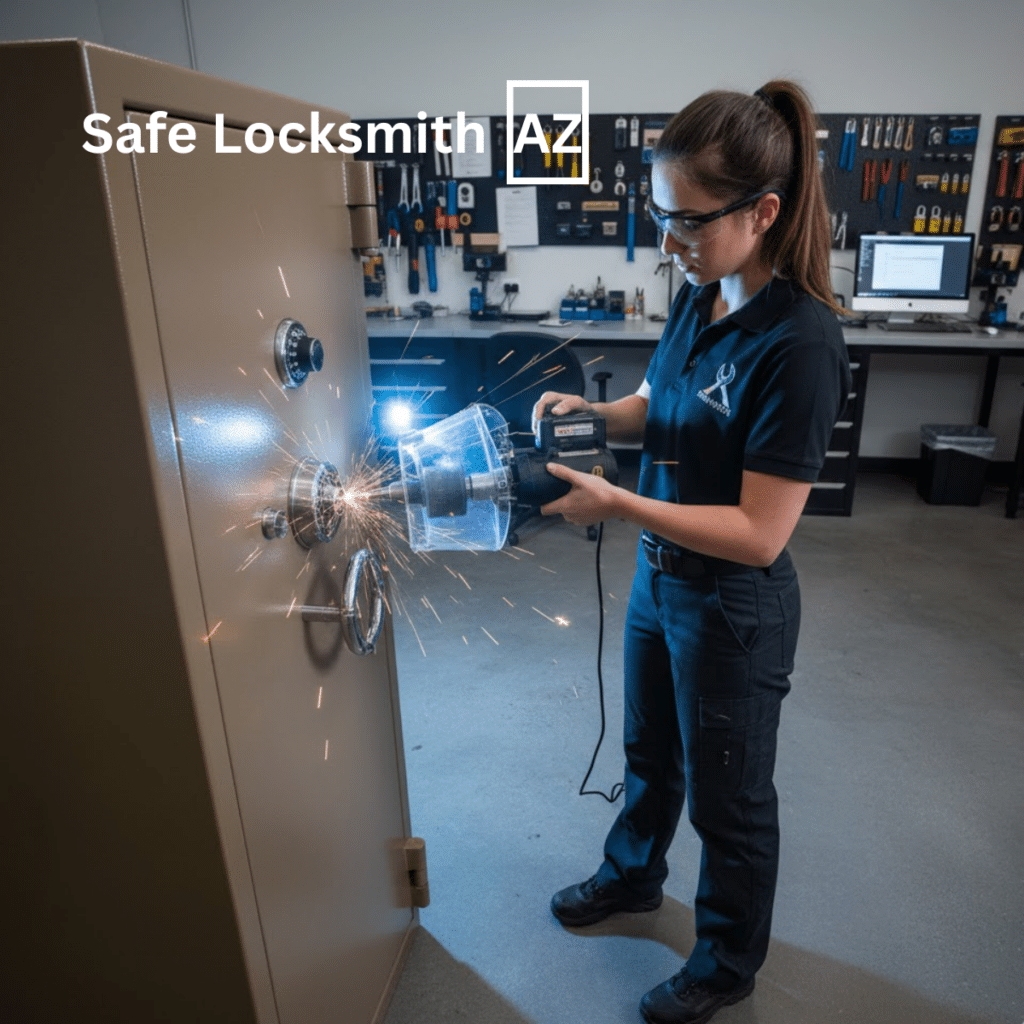
When a gun safe remains locked, the best path forward is to remain calm and avoid using heavy tools like crowbars or grinders. These DIY methods often trigger relockers, making the professional’s job more difficult and expensive. Owners should evaluate the value of the safe versus the cost of the opening. For an inexpensive “cabinet” style safe, it might be more cost-effective to force it open and replace it. For a high-quality fire-rated safe, professional service is always the better investment to preserve the unit’s integrity. Ensure the technician is licensed and insured before they begin work on your equipment.
Safe Locksmith AZ Assistance
If you find yourself locked out of your firearm storage, Safe Locksmith AZ provides expert technical support. The technicians handle everything from simple battery failures to complex mechanical jams in high-security vaults. For professional inquiries or to schedule a service visit, contact the team at (623) 282-1352 or send an email to info@safelocksmithaz.com. Reliable security requires professional maintenance and precision handling.
Sources
- Liberty Safe – Manufacturer of residential gun safes providing technical data on lock types and maintenance requirements.
- UL Solutions – A global safety science organization that establishes security ratings for safes and locking mechanisms.
- Fortune Business Insights – A market research firm providing data on the growth and trends of the global safe and vault industry.
- Bureau of Alcohol, Tobacco, Firearms and Explosives (ATF) – A federal agency that provides guidelines and safety recommendations for the secure storage of firearms.
